
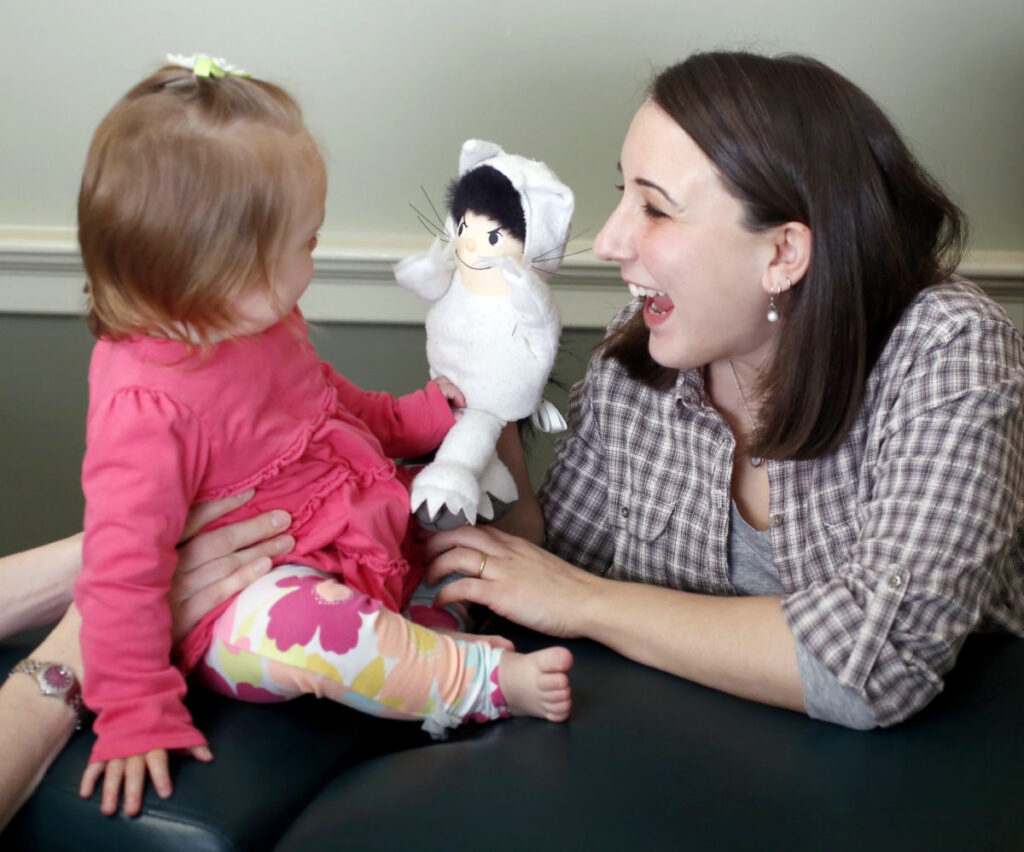
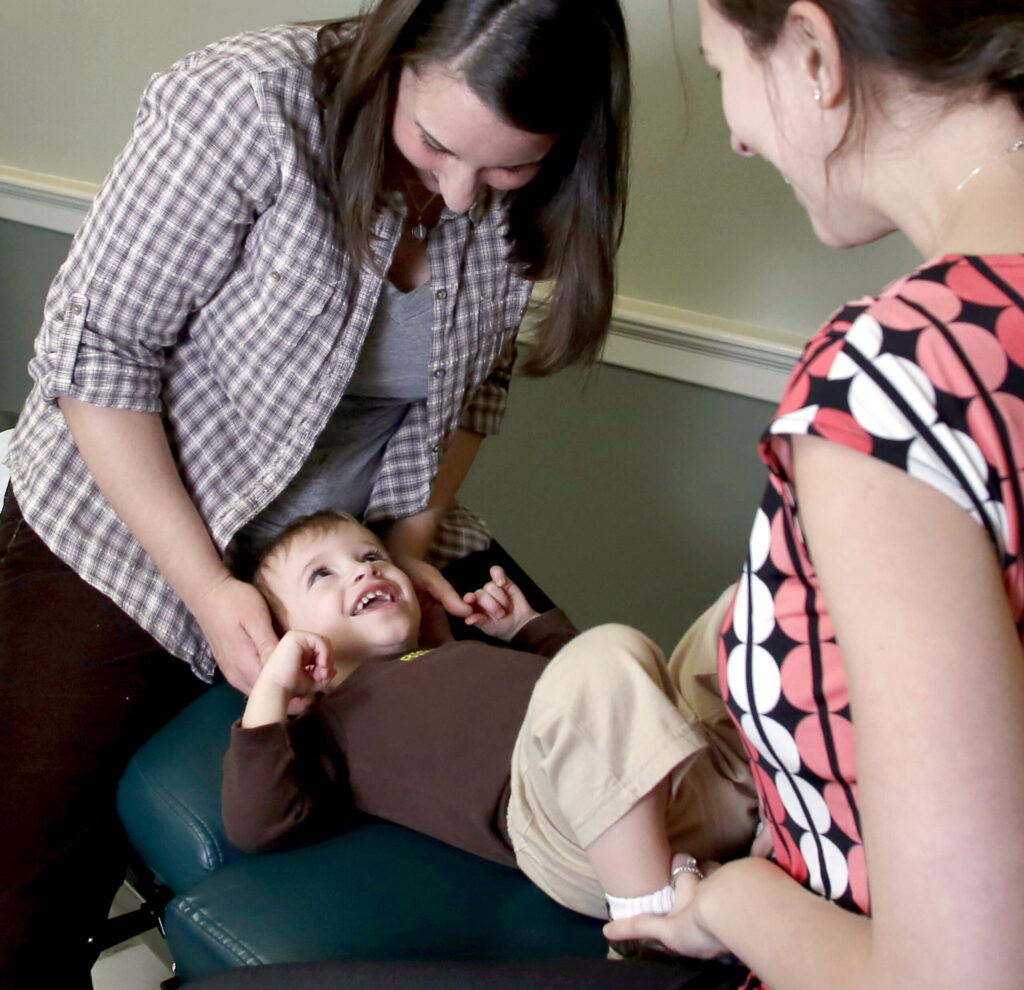
Why would a baby need chiropractic care? It’s a fair question. Maybe you’ve seen it mentioned in a mom group, or a friend brought it up, or perhaps your midwife, lactation consultant, or pediatrician recommended it. Your first reaction was probably some version of: wait, chiropractors adjust babies?
The answer is, yes. But it probably looks nothing like what you’re picturing. So, let’s talk about the why first, and then what chiropractic care for babies actually looks like.
Okay, So Why Would a Baby Need This?
Sometimes it starts before birth even happens. A baby’s position in the womb can create musculoskeletal patterns long before labor begins. A tight or unusually shaped uterus, limited room to move, a breech or transverse position, or simply how a baby was tucked for those final weeks can all leave an impression on tiny, developing muscles and joints.
Then there’s birth itself. We talk a lot about how hard birth is on the birthing parent, and it absolutely can be. But babies are doing something remarkable and physically intense at the same time. Moving through the birth canal (or being lifted out during a cesarean) involves significant forces on a very small body, particularly on the head, neck, and spine.
For most babies, this goes smoothly and they’re perfectly comfortable right out of the gate. For others, whether because of how they were positioned in utero, a long labor, vacuum or forceps assistance, or a very fast delivery, these patterns can show up as tightness, restricted movement, or a strong preference for one side that doesn’t resolve on its own. It doesn’t show up on a scan. It doesn’t always look like anything obvious from the outside. But it can affect how a baby feels, moves, and functions in those early weeks.
So What Might That Actually Look Like?
Babies can’t tell you what’s bothering them, which is part of what makes early infancy so challenging. But there are signs that can point toward musculoskeletal issues. These can include things like:
- Difficulty turning the head to one side, or always favoring one direction
- A strong preference for feeding on one side
- Trouble latching or feeding comfortably
- Persistent fussiness that doesn’t have an obvious cause
- Asymmetrical posture or a head that seems flattened on one side
- Trouble settling or sleeping in certain positions
None of these automatically mean something is wrong, and all of them have lots of possible causes. If any of these sound familiar, a chiropractic evaluation can be a great first step. It’s gentle and low risk, which means it often makes sense to try early (assuming nothing is medically urgent), before things become more entrenched and before moving on to less conservative interventions. And if you’ve already tried other approaches and something still seems off, it’s just as worth exploring then too.
What Does a Baby’s Chiropractic Visit Actually Look Like?
This is where most people’s mental image needs an update.
Adjusting an infant is nothing like adjusting an adult. There is no cracking. (Fun fact: plenty of adult adjustments don’t involve cracking either, but that’s a story for another post.) There are no sudden movements. The pressure used is genuinely gentle, roughly the same amount of pressure you’d comfortably use to check if a tomato is ripe. That’s not an exaggeration. Newborn tissue is soft and responsive, and it takes very little to make a difference.
We start, as we do with every new patient of any age, with a thorough evaluation. For babies, that means a full history of the pregnancy and birth, a hands-on assessment of movement, structure, reflexes, and developmental milestones, and a real conversation with you about what you’re noticing at home. From there, we talk through what we’re finding and what we think might help, and we don’t do anything until you fully understand and are on board. Babies can’t consent for themselves, which means your informed consent matters even more.
Techniques used for infants are specifically adapted for their size and developmental stage. We’re not applying a scaled-down version of adult care. We’re working within a completely different framework that’s designed for tiny, developing bodies.
What About Feeding and Latching Specifically?
This one comes up a lot, and for good reason. Breastfeeding challenges are incredibly common and can be really distressing, and they don’t always have a simple explanation. Tongue tie gets a lot of (deserved) attention. But sometimes what’s also at play is tension in the neck, jaw, or upper spine that makes it hard for a baby to position properly or comfortably, achieve a good latch, or sustain the sucking motion without effort.
Chiropractic care for infants with feeding difficulties isn’t a guaranteed fix, and we’re always honest about that. But when it’s part of the picture, addressing the musculoskeletal component alongside lactation support can make a meaningful difference. We work with local lactation consultants and other providers regularly, and we’ll always tell you when a referral makes sense.
Is It Safe?
Pediatric chiropractic, practiced by someone with appropriate advanced training and experience, has a strong safety record. The techniques are completely different from adult techniques, and a qualified provider will always work within the limits of what’s appropriate for a baby’s age and size.
At Pinetree, infant and pediatric care is something we take seriously, which means we’re not improvising. If we don’t think chiropractic is the right fit for what you’re describing, we’ll tell you that and point you in a better direction.
You Know Your Baby
Parents often come in saying some version of “I feel like something is off but I can’t explain it.” That instinct is worth paying attention to. You are with your baby more than anyone. You know what their baseline looks like. If something feels like it isn’t working the way it should, it’s worth getting looked at.
A chiropractic evaluation is low-stakes. We look, we talk, we share what we’re finding. If there’s something we can help with, we’ll tell you. If there isn’t, we’ll tell you that too.
If you have questions before booking, reach out. We’re happy to talk through what you’re noticing and help you figure out whether a visit makes sense.